
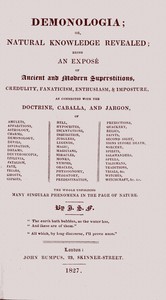
Demonologia : or, natural knowledge revealed; being an exposé of ancient and…
J.S. Forsyth's Demonologia isn't your typical book about demons. Published in the early 19th century, it sets out on a bold mission: to explain the supernatural through the lens of the natural world. Forsyth takes the countless stories, myths, and religious accounts of demonic possession, witchcraft, and evil spirits that have haunted humanity for millennia and subjects them to the scrutiny of reason.
The Story
There isn't a traditional plot with characters. Instead, the book is a structured argument. Forsyth acts like a historical detective, sifting through ancient texts, religious doctrines, and folklore. He systematically presents common beliefs about demons—how they possess people, cause plagues, or whisper temptations. Then, chapter by chapter, he proposes alternative explanations. A case of 'demonic possession' might be re-diagnosed as epilepsy or a severe mental illness. Stories of witches flying could be linked to the use of hallucinogenic plants. Political upheavals blamed on the devil are examined as tools used by rulers to control their populations. The 'story' is the journey of seeing these terrifying concepts slowly unravel into things we can understand, like medicine, psychology, and sociology.
Why You Should Read It
What makes this book so compelling is its fearless curiosity. Forsyth writes with the passion of someone trying to clear away the fog of fear. Reading it, you get a real sense of the intellectual courage it took to challenge such deeply ingrained beliefs in an era that was still very religious. It's not a dry, academic text; it feels like a passionate plea for rational thought. You start to see patterns in how humans use the idea of 'evil forces' to explain misfortune, illness, and differences in others. In many ways, it holds up a mirror to our own times, asking us what modern 'demons' we might be creating out of things we don't yet understand.
Final Verdict
This book is perfect for history buffs who love seeing how people in the past grappled with big ideas, or for anyone interested in the history of science and skepticism. It's also a great pick for readers of spooky nonfiction who want to go deeper than the ghost story and ask why the stories exist in the first place. Be warned: it's not a light read, and the 19th-century prose takes a page or two to settle into. But if you stick with it, you'll find a surprisingly modern and insightful mind at work, trying to bring light to the dark corners of human belief.
This text is dedicated to the public domain. It is now common property for all to enjoy.
Melissa King
6 months agoTo be perfectly clear, the content flows smoothly from one chapter to the next. Exactly what I needed.
Joseph Lopez
2 years agoFrom the very first page, it manages to explain difficult concepts in plain English. One of the best books I've read this year.
Ava Perez
1 year agoThis is one of those stories where the emotional weight of the story is balanced perfectly. A true masterpiece.


Deborah Nguyen
5 months agoRead this on my tablet, looks great.