
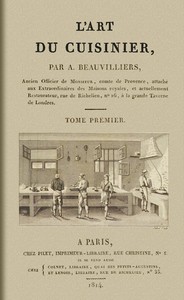
L'Art du Cuisinier, Volume 1 by A. B. Beauvilliers
Forget everything you know about dry, technical cookbooks. L'Art du Cuisinier is a vibrant snapshot of a culinary big bang. Published in 1814, it was written by Antoine Beauvilliers, a man who witnessed the collapse of the French monarchy and the rise of a new social order. His book was a direct response to that chaos.
The Story
There isn't a plot in the traditional sense, but there is a clear narrative mission. Beauvilliers had been a chef in aristocratic households before opening his own restaurant, Le Grande Taverne de Londres, in 1782. After the Revolution, the old system of private chefs serving only the wealthy crumbled. His book is his attempt to systemize and democratize (for those who could afford it, anyway) the principles of haute cuisine. He lays out everything: how to organize a kitchen brigade (a system still used today), how to manage a dining room, and hundreds of recipes that bridge the gap between lavish old-regime feasts and the refined, service-oriented dining that defines modern restaurants. The 'story' is the birth of an industry, told by its founding father.
Why You Should Read It
What makes this book special is the voice. Beauvilliers isn't a detached expert; he's a passionate craftsman and a bit of a perfectionist. His frustration with sloppy technique jumps off the page. Reading his instructions, you get a real sense of the man—proud, meticulous, and fiercely dedicated to elevating the chef's profession. It's also incredibly grounding. You'll find the origins of classic sauces and techniques, but also reminders of a time before refrigeration or standardized measurements. It connects the dots between the past and your plate in a very tangible way. This isn't just history; it's the foundation.
Final Verdict
Perfect for food nerds, history lovers, and anyone in the hospitality industry who wants to understand their roots. It's not a book you'll cook from daily (unless you have a ready supply of lark tongues), but you'll read it with a new appreciation for every well-run restaurant you've ever enjoyed. Think of it as the essential prequel to every cooking show and chef's memoir you love. A genuine, captivating classic.
This is a copyright-free edition. Knowledge should be free and accessible.
Daniel Taylor
11 months agoSolid story.
Kevin Harris
4 months agoWithout a doubt, the pacing is just right, keeping you engaged. Highly recommended.









Amanda Taylor
8 months agoI had low expectations initially, however it manages to explain difficult concepts in plain English. This story will stay with me.